Preparing Teachers to Integrate Ag Robotics with Hands-on Tools and Curriculum
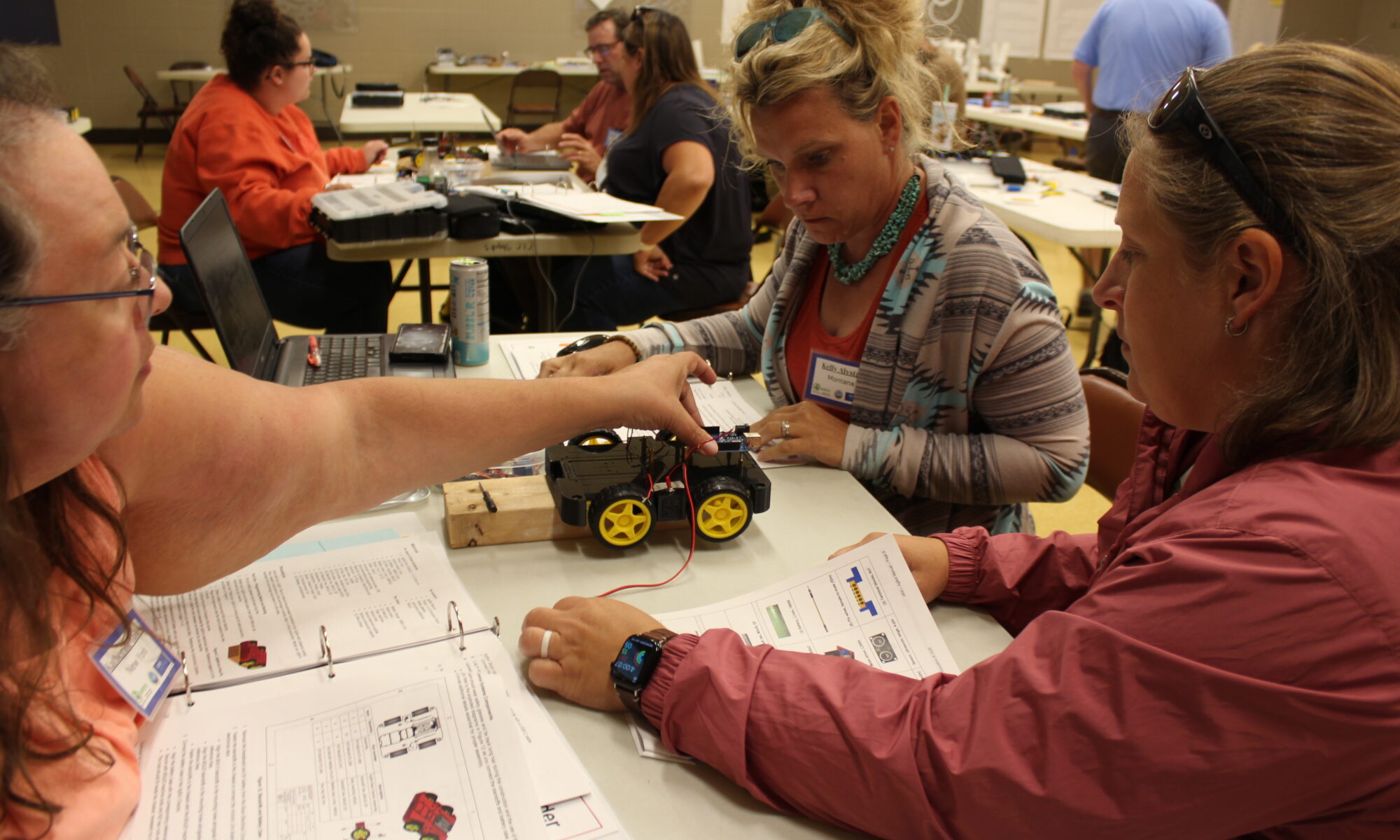
Staples, Minn. – Central Lakes College in Staples, Minnesota, recently hosted two back-to-back field tests of the Agricultural Robotics and Automation Technology (ARAT) curriculum. A total of 31 high school instructors from across the country participated in this multi-day professional development training, designed to help educators bring robotics, automation, and sensor technology into their agriculture, science, and technology classrooms.
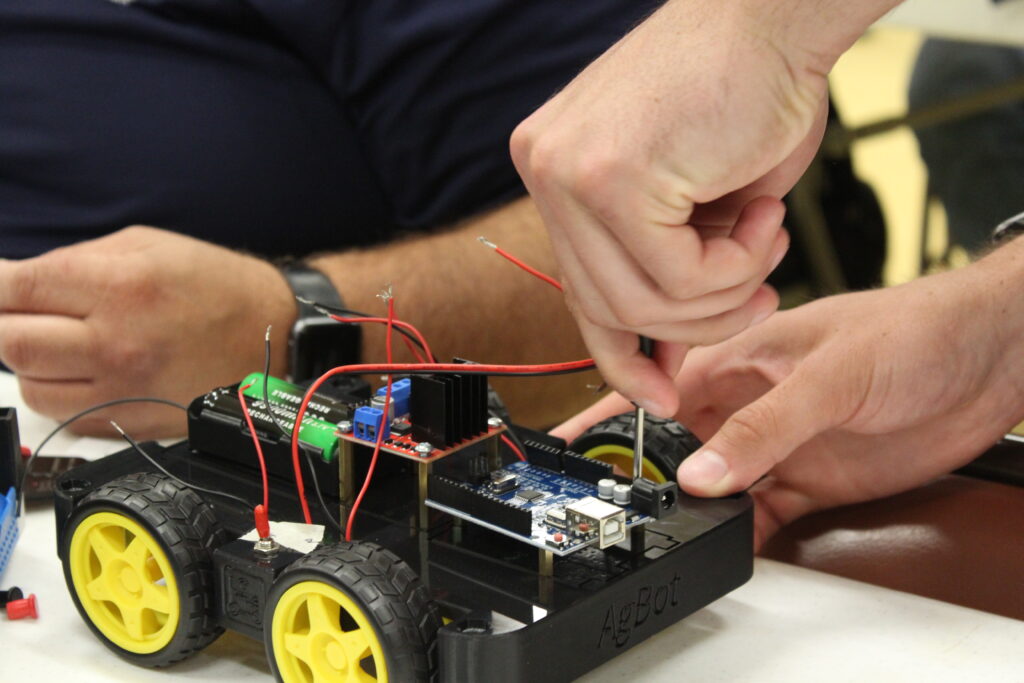
The ARAT curriculum is being developed by the Curriculum for Agricultural Science Education (CASE) in partnership with AgCentric, the Minnesota State Northern Agricultural Center of Excellence. The project is supported by funding from the National Science Foundation (NSF). This innovative course introduces students to hands-on learning in robotics, coding, engineering concepts, and automation systems—all within the context of real-world agriculture.
The first field test was held from Monday, July 28 through Wednesday, July 30, 2025, with 15 instructors participating. The second field test, held from Wednesday, July 30 through Friday, August 1, 2025, included 16 instructors. Both sessions were hosted at Central Lakes College and designed to deliver the full ARAT curriculum while collecting structured feedback to refine content and implementation strategies.
Key Components of the Training Included:
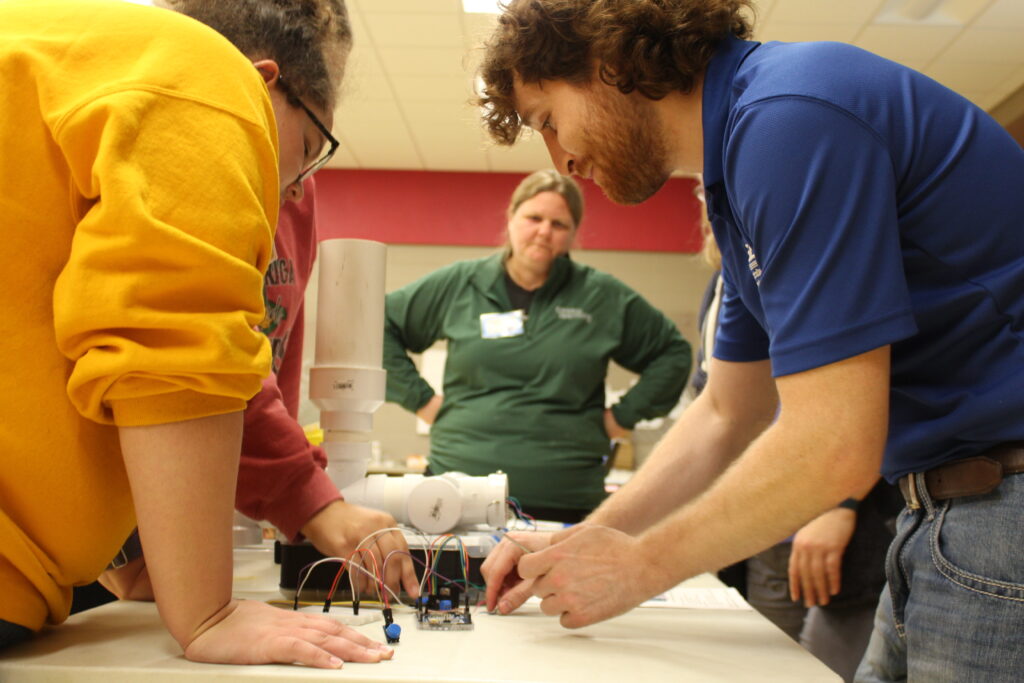
- Building and programming robotic arms and conveyors to simulate agricultural automation
- Integrating and coding environmental sensors for real-time data collection and system response
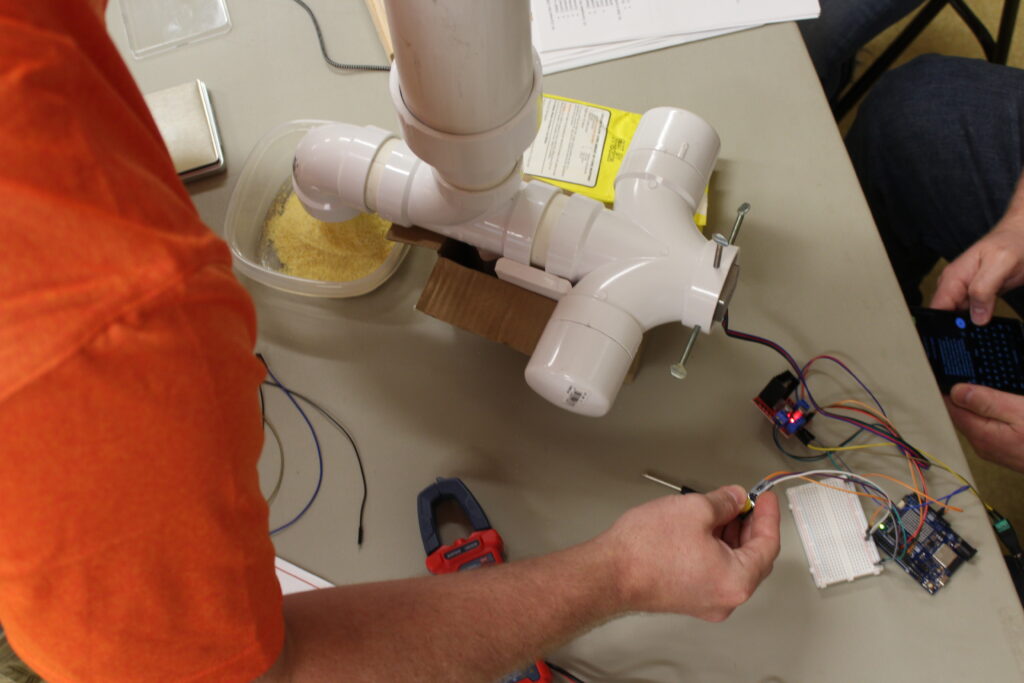
- Designing and assembling an automated turkey feeder as a collaborative capstone project
- Touring Central Lakes College’s robotics and agriculture labs, linking high school content to postsecondary career pathways
- Providing detailed feedback to inform final curriculum development prior to broader distribution
ARAT builds on the foundation of CASE’s Technical Applications in Agriculture (TAA) course, which is now called Ag Equipment Maintenance and Technology (AEMT). It responds to the increasing need for agriculture programs to integrate STEM-based content such as robotics, automation, and precision systems. Designed for high school learners, the curriculum engages students in problem-solving, applied technology, and cross-disciplinary learning that mirrors today’s ag-tech industry.
Both field test cohorts included high school teachers representing a wide range of educational backgrounds and program types, including agriculture education, general science, and robotics. Their participation is central to ensuring that the final curriculum is flexible, relevant, and accessible to a variety of schools and student populations.
Feedback gathered during both field tests will be used by CASE and AgCentric to finalize the ARAT curriculum before it becomes available to instructors across the CASE network.


)